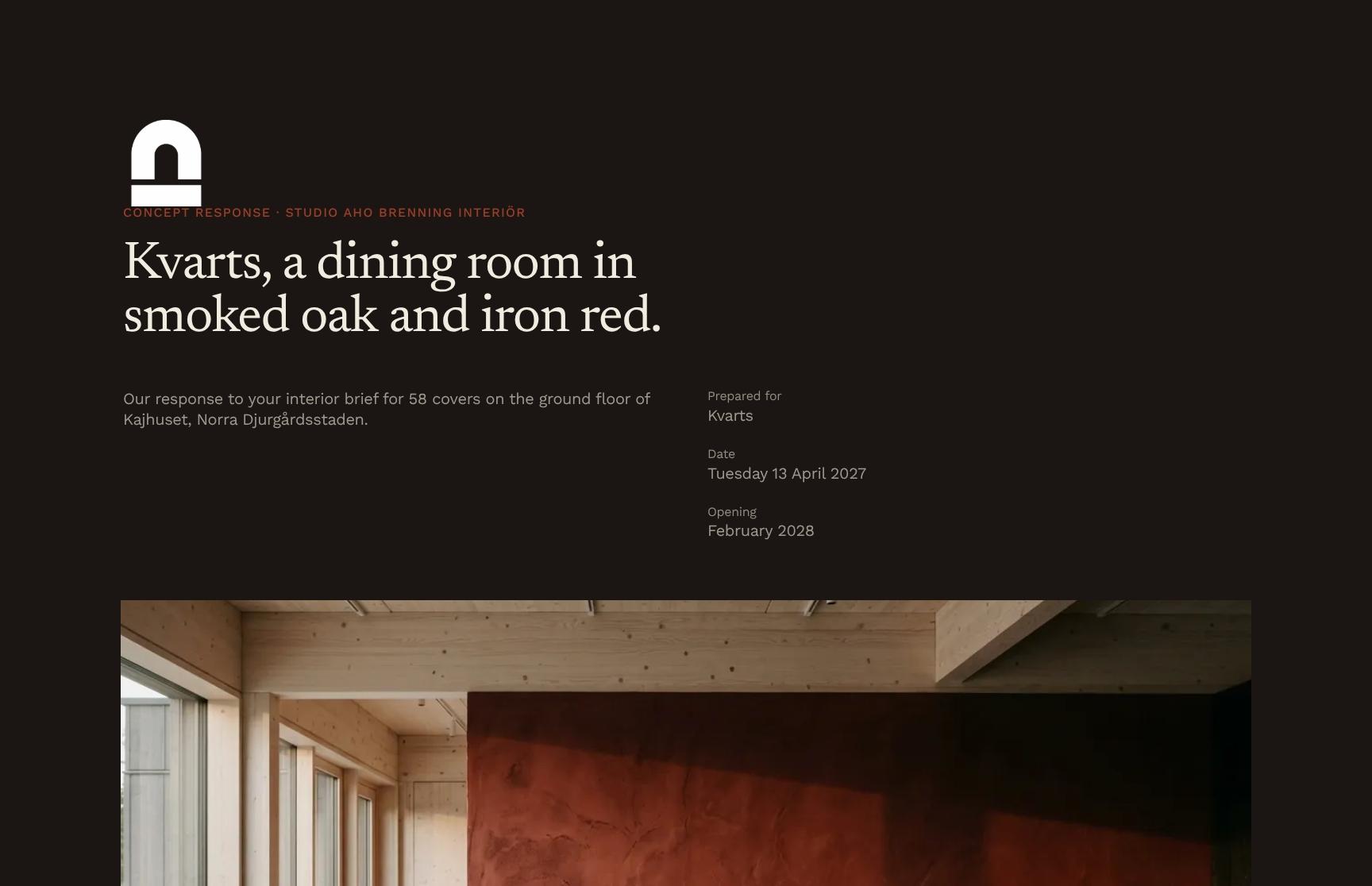
Interior Design FF&E Procurement Statement of Work Template
Statement of work template for interior designers: define FF&E procurement scope, milestones, lead times, deposits and installation for residential projects.
Make it yours, in seconds
Every template is a starting point. Drag to shift colour, typography and layout — the live preview updates as you move.
Move the dots to shift colour, typography and layout. The preview updates live.
Get more from every document
Lock down exactly what you're buying, when it ships, and who pays for what on every residential FF&E order. Milestones tied to lead times, an item tracker, and deposit terms sit ready to edit.
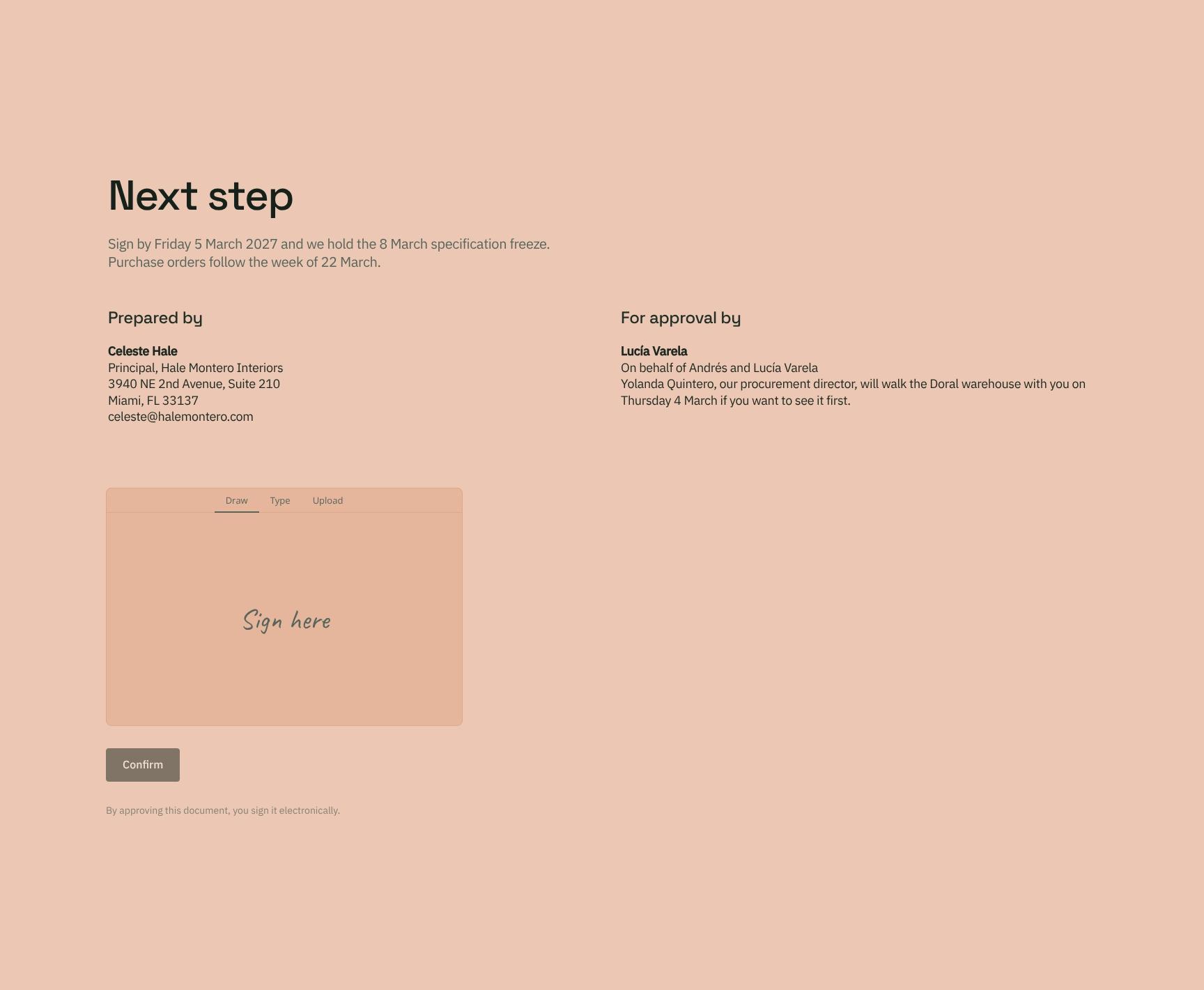
Get the agreement signed on the page
Your client reads the scope, checks the price, and signs in the same document. No PDF to print, sign, scan, or lose.
Assemble agreements from proven sections
Drop in pricing, steps, and terms blocks, then save your own payment schedule to reuse on every new client.
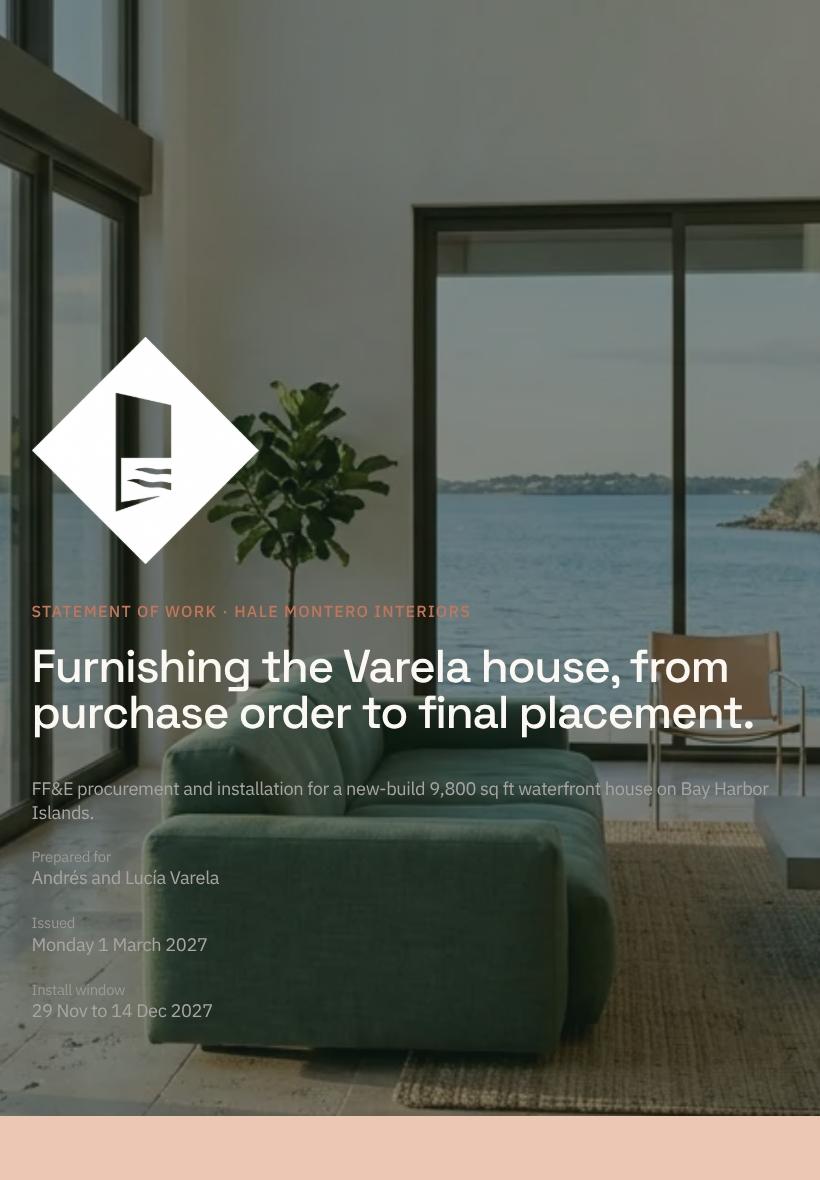
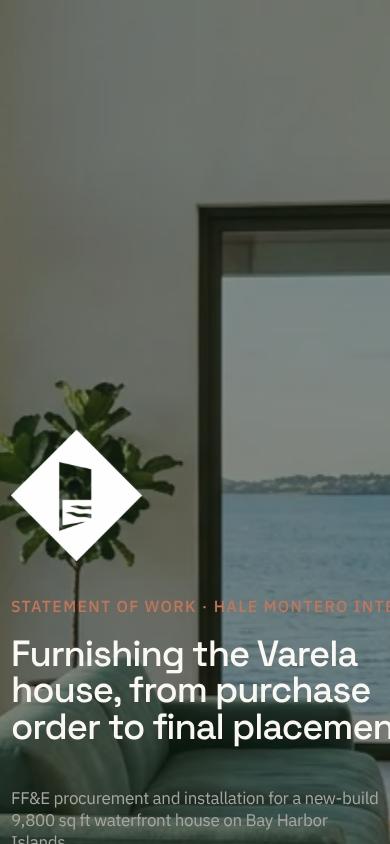
Clients sign from any screen
Your terms, pricing tables, and steps stay readable on a laptop at the desk or a phone between meetings.

See which terms your client lingers on
Heatmaps show whether they stall on pricing or the scope, so you know what to address before you follow up.
Know the moment they sign
Get a ping when your client opens the agreement, comments on a clause, or signs, so you can start work right away.
Finalize terms with your team live
You tweak the pricing while a teammate rewrites the deliverables, and the agreement is ready to send sooner.
See how every part fits
The document opens with a cover and project scope, moves through milestones, budgets, and risk terms, and closes with signatures and deadlines. Keep what fits your project, drop what doesn't, and reorder anything.
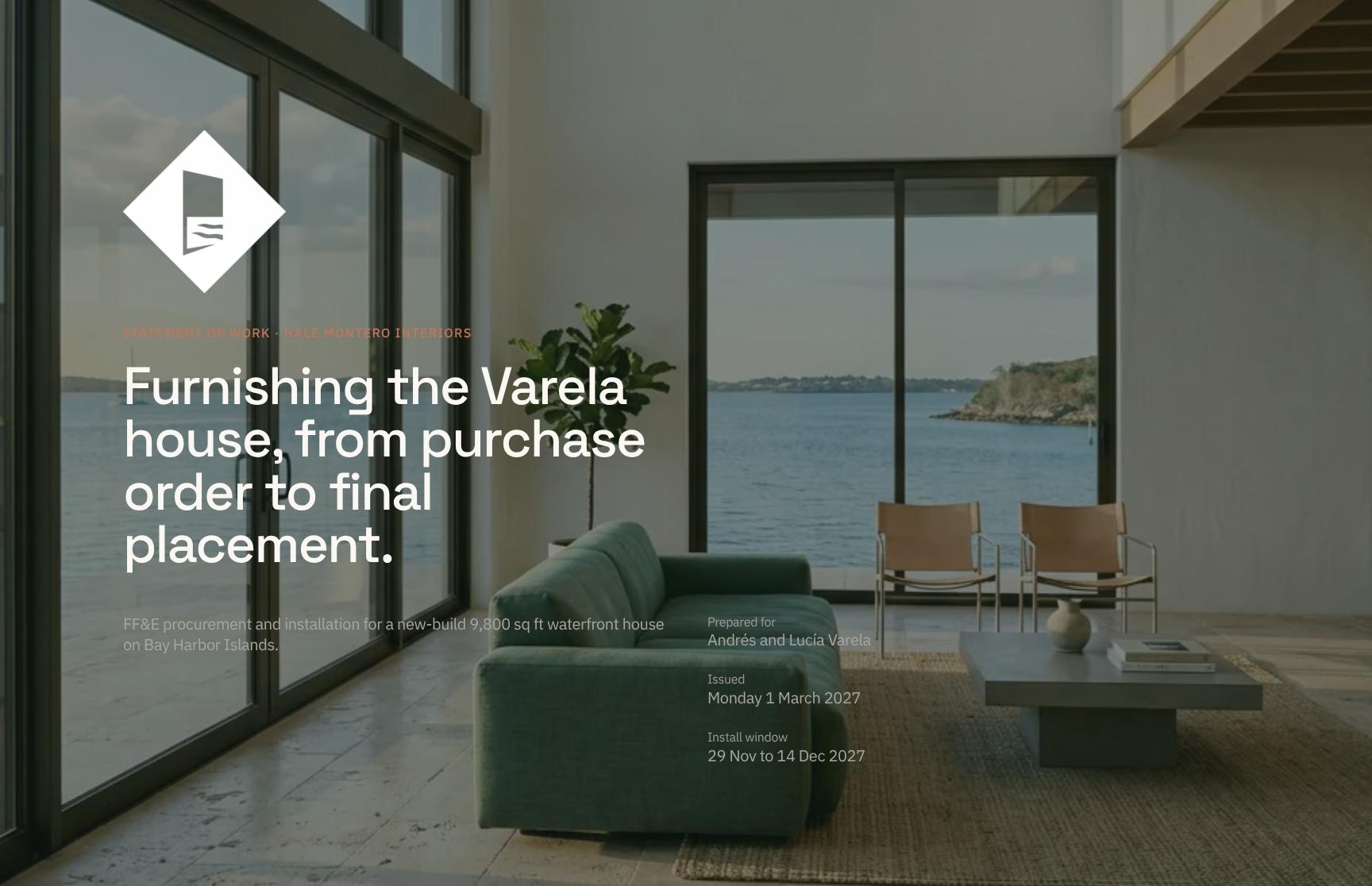
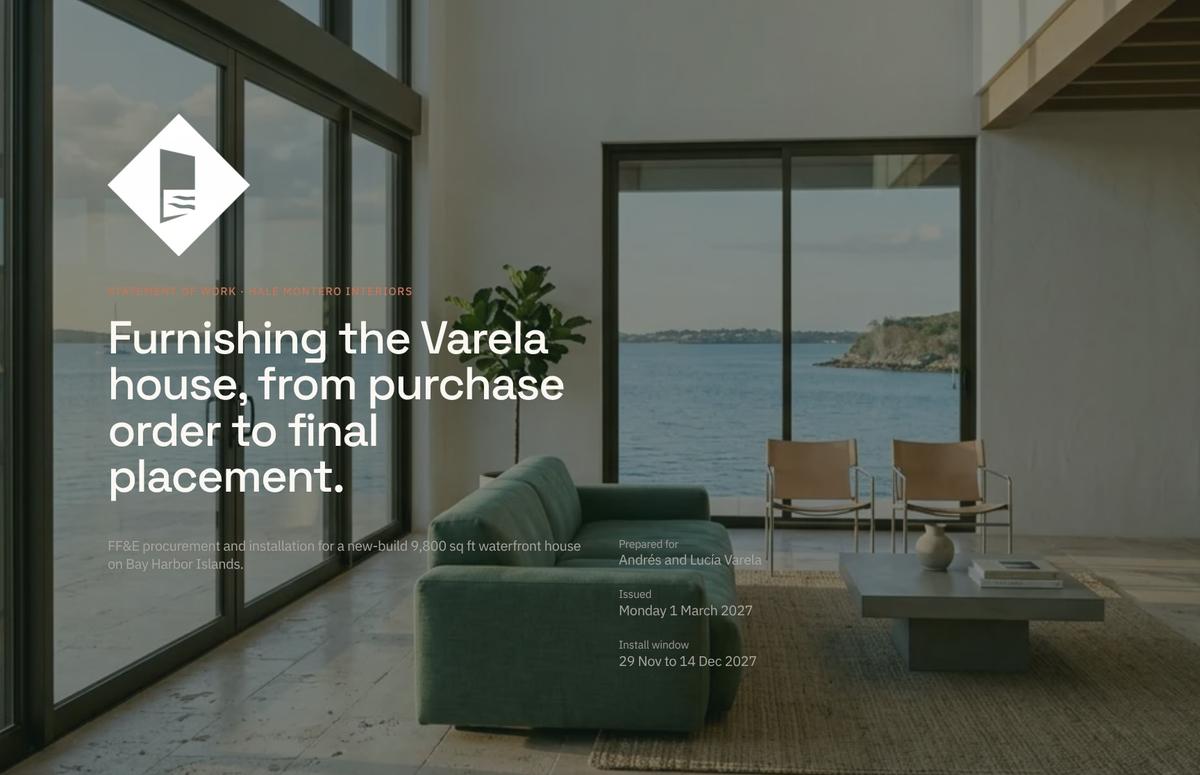
Statement of Work Cover Page for FF&E Procurement Project
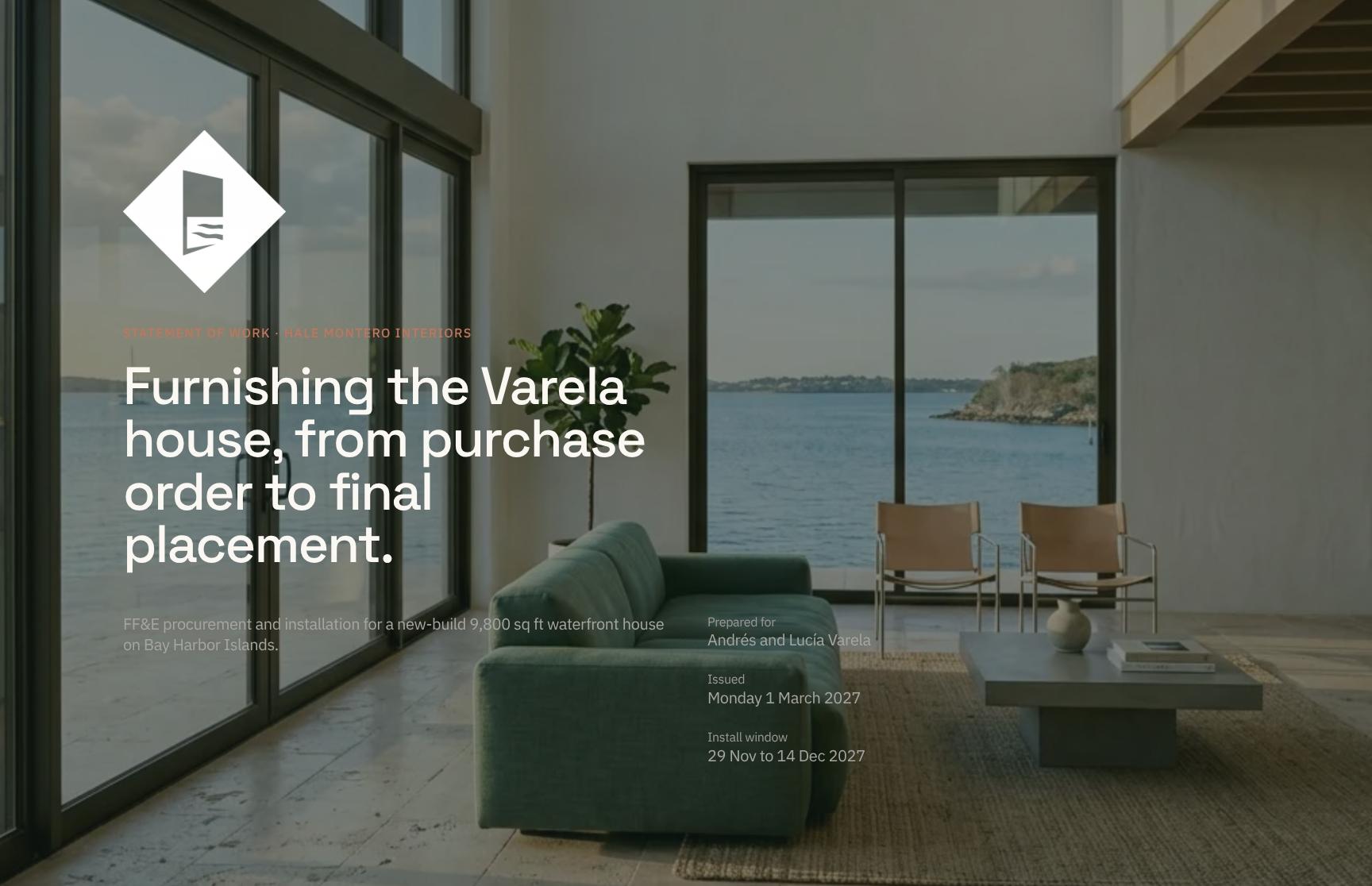
A polished cover that names the project, client and scope: FF&E procurement and installation for a 9,800 sq ft waterfront house. It sets a professional tone and identifies the document at a glance.

Parties, Dates and Scope of Work Overview
Defines who is involved, the nine-month timeline and what the agreement covers: buying 412 specified items, delivering them to Miami intact and placing each before move-in. Removes ambiguity up front.
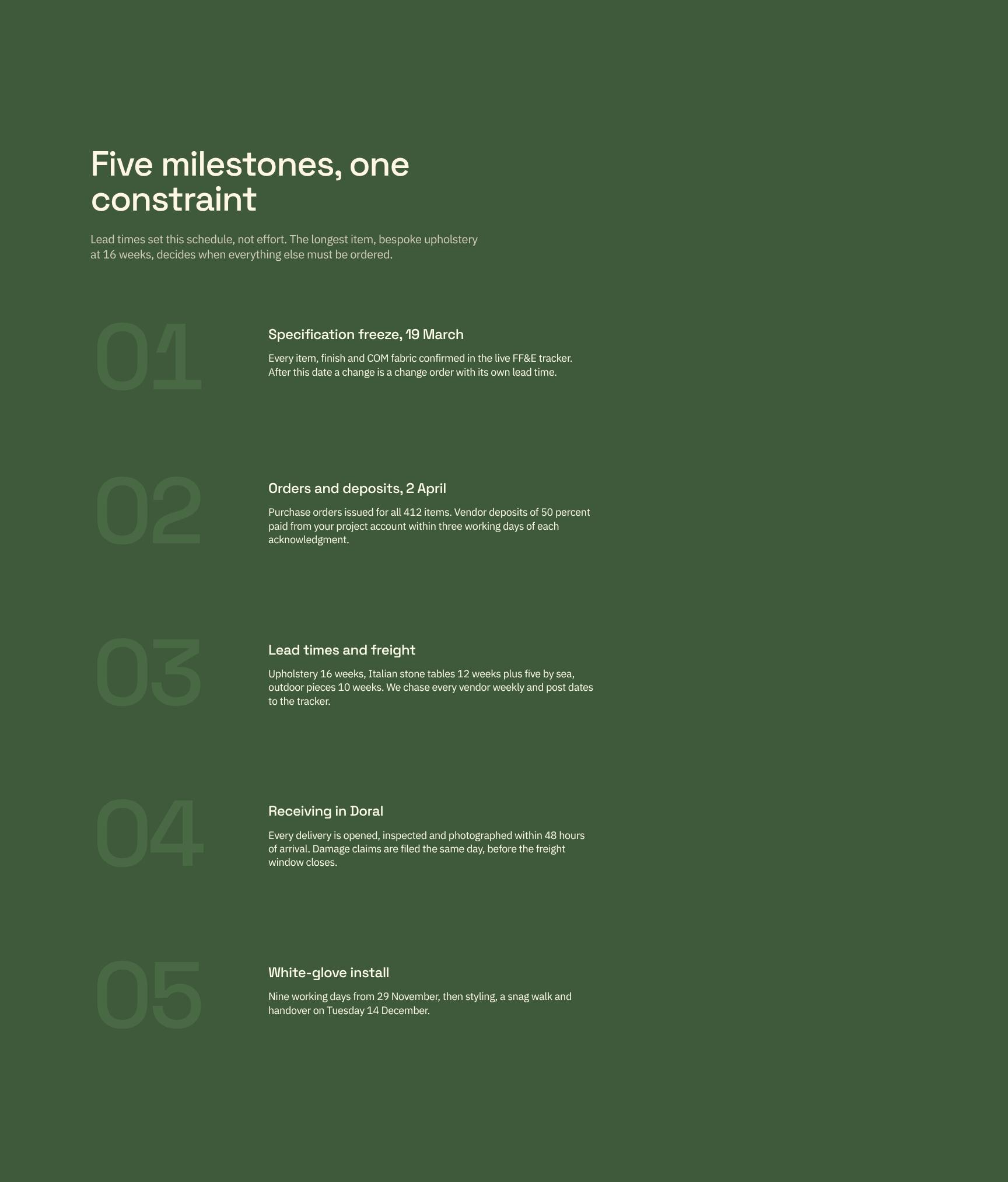
Project Milestones Driven by Vendor Lead Times
Five clear milestones explain how the 16-week bespoke upholstery lead time sets the ordering sequence. Clients see why the schedule is what it is and what happens at each stage.

FF&E Procurement Categories and Shared Item Tracker
Breaks 412 items into six categories, each tracked with vendor, lead time, deposit status and location. Round-the-clock visibility builds trust and cuts status-update requests.

Forty-Week Delivery and Installation Schedule
A task-by-task timeline with stated assumptions: sign-off on purchase order batches within three working days and a certificate of occupancy by 11 November. Shows the dependencies that protect the move-in date.
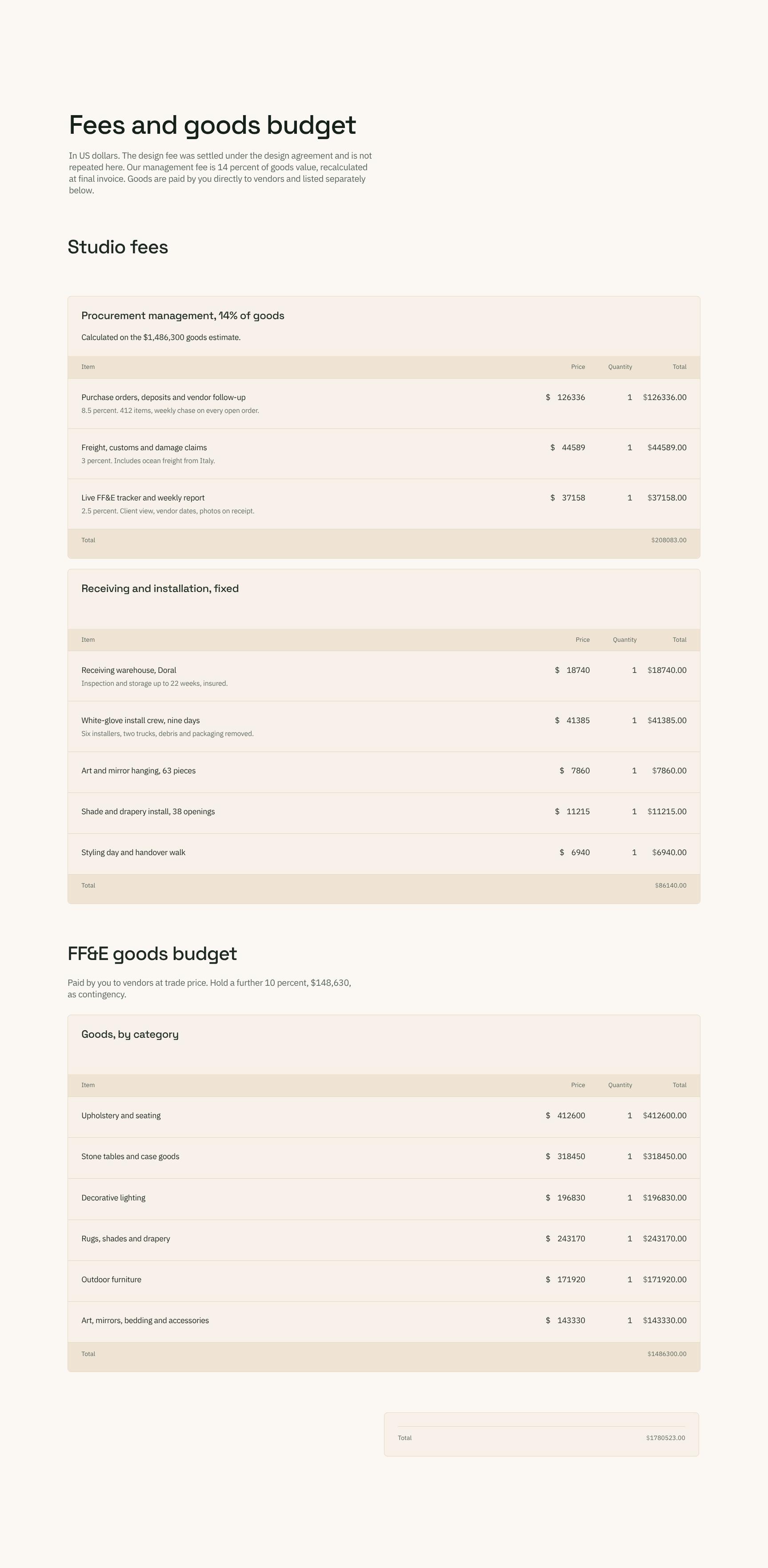
Management Fees and Goods Budget in USD
Lays out the 14 percent management fee on goods value, recalculated at final invoice, and how goods are paid directly. Clear pricing logic keeps budgets transparent and avoids surprises.
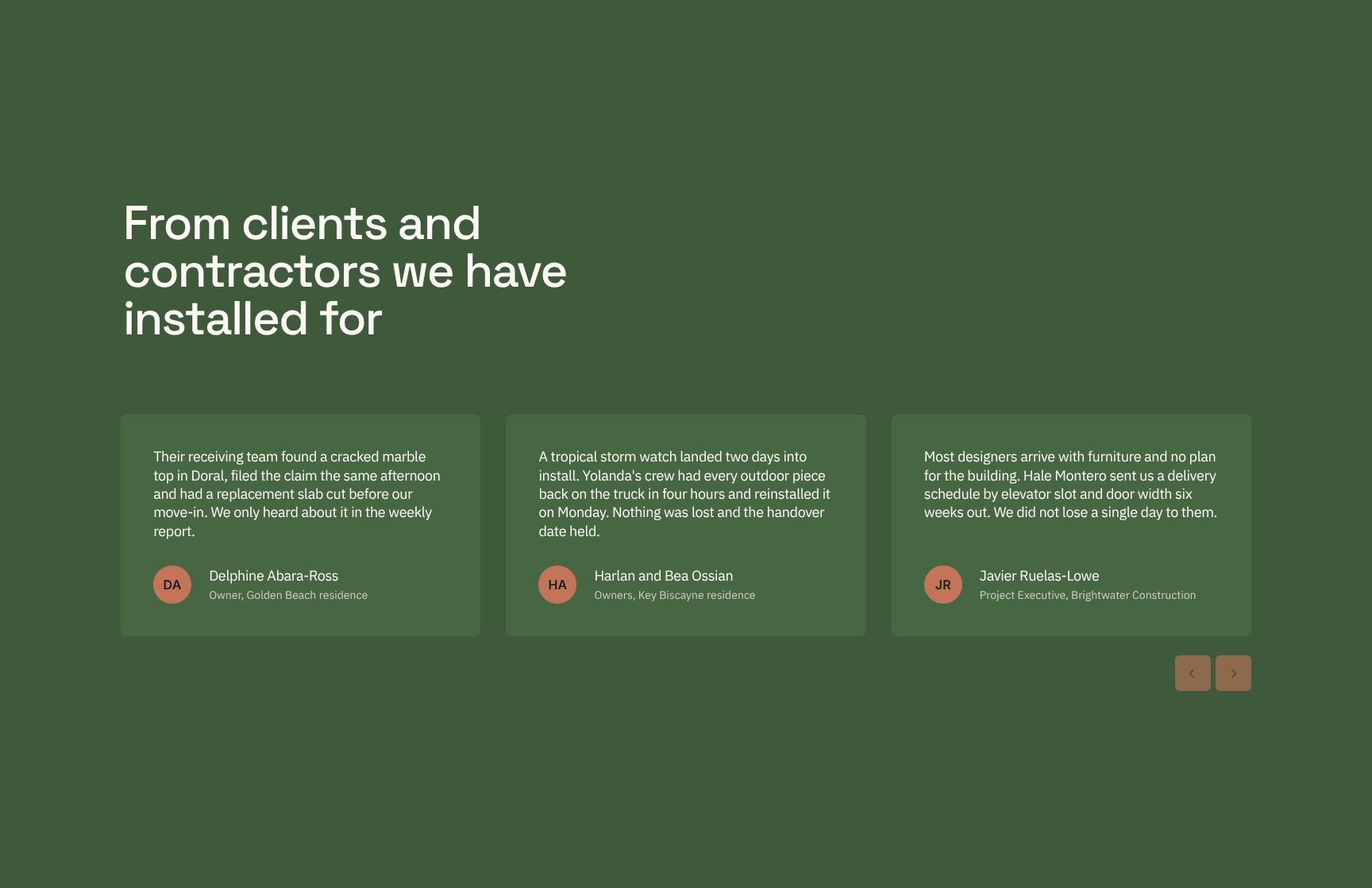
Client and Contractor References and Testimonials
Real feedback from clients and contractors who have had installations handled, including a quick response to damaged marble. Social proof that shows how problems are caught and solved.
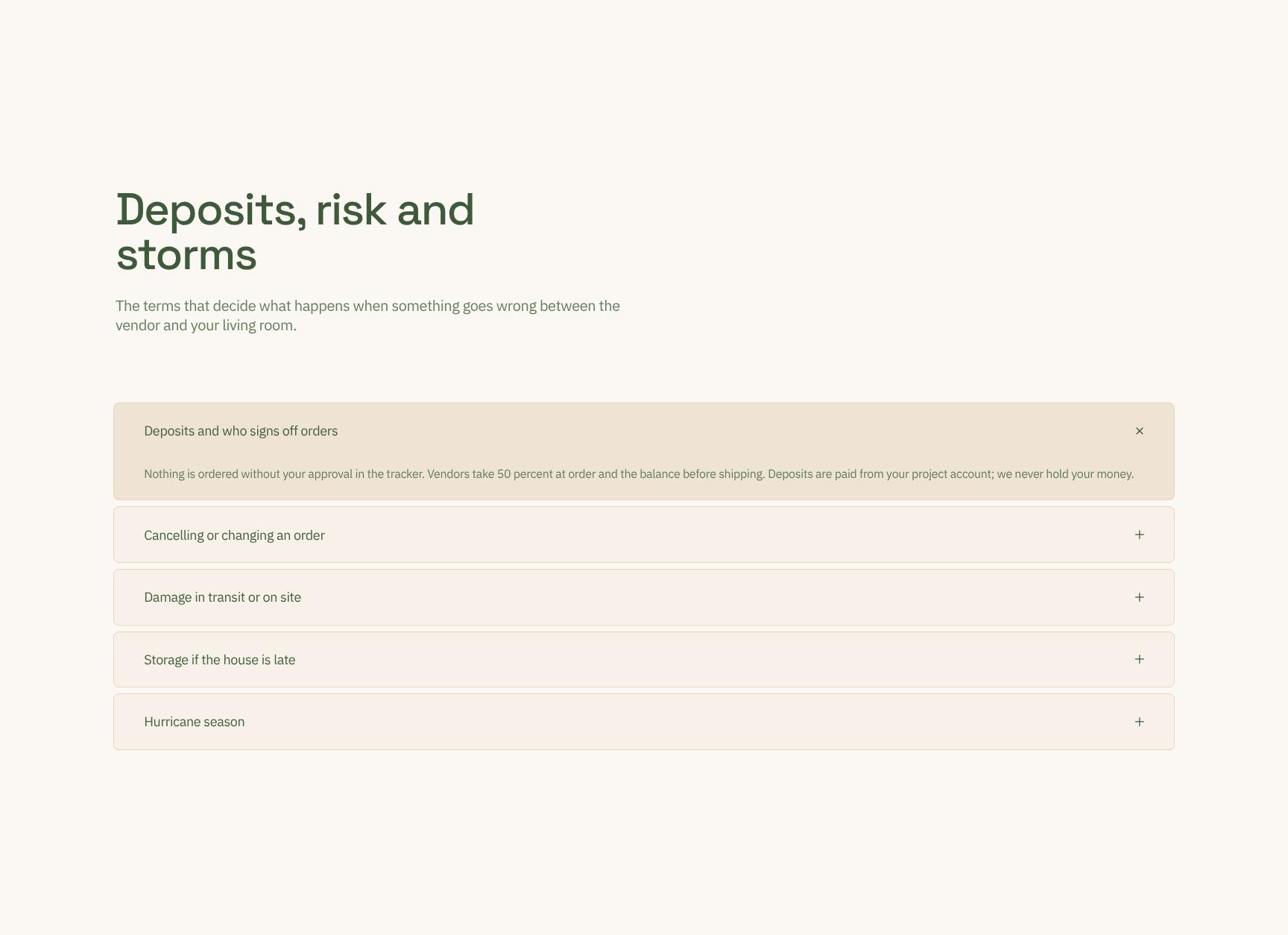
Deposits, Risk and Storm Terms Explained
Expandable terms covering deposits, risk of loss and storm disruption between vendor and living room. Keeps the legal detail organized and easy to scan, so responsibilities are clear if things go wrong.

Core Delivery Principle: Warehouse Staging in Doral
A single animated statement of the operating rule: every piece waits in Doral for the house, never the house for a piece. It memorably captures the project's approach to sequencing and risk.
Approval and Signature Next Steps with Key Deadlines
A clear call to sign by 5 March 2027 to hold the 8 March specification freeze, with purchase orders following the week of 22 March. Turns agreement into action with firm dates.
Find your answers
Answers to common questions about scoping, pricing, and managing FF&E procurement agreements for residential interior design projects.
A solid procurement agreement should include a cover page, the parties and scope of work, defined milestones, a clear description of what is being procured, a delivery schedule, and a fees section. Together these sections set expectations, assign responsibilities, and reduce disputes over deliverables, timing, and payment.
Start by replacing the placeholder names and details in the Cover and Parties and scope sections. Next, edit the Milestones, What we procure, and Schedule sections to match your deliverables and deadlines, then update the Fees section with your pricing and payment terms. Remove any sections you don't need and have a legal professional review the final version.
Yes, you can typically export the finished agreement to PDF for signing and sharing, or to Word format for further editing and redlining. Use PDF for a final, locked version and Word when the other party needs to propose changes. Check the export options in your editor for the exact formats supported.
List each milestone with a clear deliverable, an acceptance criterion, and a due date in the Milestones and Schedule sections. Then link payments to those milestones in the Fees section, specifying amounts, currency, invoicing timelines, and late-payment terms. Tying fees to milestones keeps both parties accountable and protects cash flow.
Yes, the structure works for many industries, including IT services, construction, consulting, and manufacturing, because it focuses on scope, deliverables, schedule, and fees. It becomes legally binding once both parties sign, but laws vary by jurisdiction. Have a qualified attorney review it for industry-specific clauses such as liability, compliance, and IP.
Browse more interior design templates
More agreements and proposals for interior designers who manage procurement, client approvals, and project scope.